Can you discuss penile implants for erectile dysfunction? I have tried various treatments but haven’t had success.

There are several options for treating erectile dysfunction, including medications, injectable drugs, and devices such as vacuum pumps. These methods are effective for most men, with the three different pills for ED working about 70 percent of the time. However, if these treatments haven’t helped, you may want to consider a penile implant or prosthesis. This allows you to have an erection at any time and maintain it for as long as you want.

Read : Penile Implant Surgery Cost in India

There are two types of penile implants: inflatable and semirigid rods. Inflatable implants consist of a fluid-filled reservoir in the abdomen, a pump with a release valve in the scrotum, and two inflatable cylinders in the penis. Squeezing the pump transfers fluid from the reservoir into the cylinders, causing an erection. Two-piece implants have fluid-filled reservoirs in the rear portion of the cylinders, with the pump in the scrotum. On the other hand, semirigid rods are bendable rods that are pointed downward to conceal the penis under clothing.

Most patients opt for an inflatable device as it looks more natural than semirigid rods. However, inflatable implants carry the risk of mechanical trouble, which may require surgical repair. On the other hand, malleable devices are easier to manipulate and simpler to insert surgically, but the rods always remain firm and are harder to conceal.

It’s important to meet with a doctor before the surgery, so you and your partner understand the risks and benefits of the procedure and how the device works. If you’re in India, you can consider consulting with Dr. Rupin Shah at EDTreatmentIndia, a leading center for penile implant surgeries in the country.

While penile implants may seem intimidating, they can be a last resort for those who have tried other treatments without success. If you know what to expect from a penile implant, you and your partner are more likely to be satisfied with the results.

For more information, please visit website www.edtreatmentindia.com or consider scheduling a consultation with EDTreatmentIndia in India.

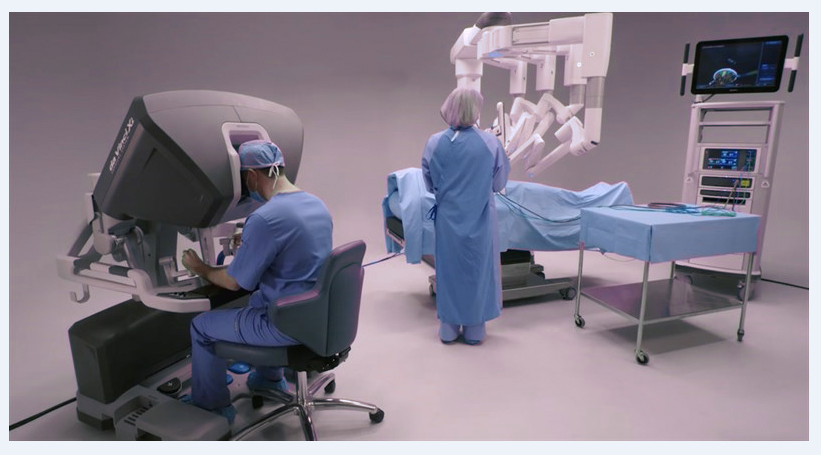
Aster Medcity in Kochi excels in robotic surgery, ranks 4th in world

Aster Medcity, Kochi announced the successful completion of 1750 minimal access robotic surgeries (MARS) using the da Vinchi system in an event conducted in the southern Indian city recently.

Being one of the most active robotic surgery centres in the state of Kerala, Medcity performed 230 kidney transplants alone via MARS. Robotic surgeries are highly specialised and advanced minimal access procedures that are performed by surgeons with the help of a surgery robot like the da Vinci at Aster Medcity Kochi.

Being a minimal access procedure, robotic surgeries are safer and surgeons can ensure high precision results compared to conventional surgeries. The associated pain, complications, blood loss and scarring are way lesser compared to normal surgeries, which in turn translates to faster recovery.

The hospital stay and postsurgery recovery period are minimal as well, and patients can get back to their normal lives in a very short time. Led by a team of highly skilled robotic surgery experts, Medcity offers robotic procedures in Urology, Gynaecology, Oncology, gastroenterology and liver transplant for patients of all ages.

“MARS is a highly advanced robotic procedure that performs minimally invasive surgeries with utmost precision. With the expertise of robotic tools, it is possible to perform operations on any sensitive part of the body with great precision. Therefore, complex surgeries can be completed very skillfully and successfully,” said Dr Kishore T A, senior consultant – Urology, Aster Medcity.

Aster Medcity is the first facility in Kerala to offer high-precision robotic surgeries using the da Vinci surgery system.

One of the only facilities in the country to offer highly specialised robotic liver and pancreas surgery, Aster MARS is the third centre in the world to perform a robotic transvaginal renal transplant surgery and the first in India to perform a robotic kidney tumour removal.

“As a leader in the healthcare society, we own the privilege of introducing the best and most advanced treatment options available in the world. With our advances in robotic surgery, we will be able to be more responsible and implement advanced medical technologies like this in the future as well,” said Farhan Yasin, Regional Director of Aster Hospital, Kerala & Oman Cluster.

“This state-of-the-art facility offers our patients advanced surgical options and help them to regain and lead their normal life. With the support of Ministry of Health complex medical services similar to the present case would be done in the upcoming Aster Royal Hospital in Muscat.”

Experts discuss importance of women’s health

A virtual conference on women’s health and technology was organised by the IndoAmerican Chamber of Commerce, North India Council (IACC-NIC) as a part of G20 conventions, celebrating 75 years of Indo-US relations on Tuesday.

The event was graced by several specialists, health professionals, social workers and field experts from India and abroad who have been working in the field of women’s health and technology.

Chief guest Lav Agarwal, additional secretary of ministry of family health and welfare, Government of India, spoke about how good health and hygiene are intrinsic to gender equity.

He also spoke of various government schemes like ‘Beti Bachao Beti Padhao’ and ‘Anaemia Mukt Bharat’ and how the latter reached 45 crore women and children in the last six years.

Addressing the event, Sangita Patil, India health director with the United States Agency for International Development (USAID), said women’s health is at the core of development and that the link between their health and economic development too is undeniable.

Dr Naresh Trehan, managing director, Medanta Heart Institute, Gurugram, spoke about the importance of knowing one’s family genetics as heart diseases, cancer and osteoporosis can often be hereditary.

He stressed that over the years, more importance had been given to women’s health as compared to the past. “Some women may also have a genetic predisposition to breast cancer,” said Dr Trehan while emphasising the importance of regular testing for women.

The regional vice president, IACC-NIC, delivered the vote of thanks while noting the importance of diagnostic tools, products and technologies introduced to improve women’s health. The event was co-organised by Yashoda Super Speciality Hospitals.

Design a site like this with WordPress.com
Get started