Don’t give Chris Powell any excuses and you won’t find yourself in the crosshairs of this talented trainer. The fans of “Extreme Weight Loss” on Tuesday night might find themselves feeling a bit uncomfortable as there isn’t a happy ending for one participant. According to WOTV on Tuesday, for the first time ever someone gets kicked off the show and it’s not going to be the best for one person who hoped to actually transform their life.
The first participant is Kenny a 410-pound man who was a former Marine. Kenny is a 35-year-old married father of three from Oklahoma City, Oklahoma. According to the show, Kenny’s depression and weight issues became a real concern for him and his family. After severe tornadoes ripped through his hometown of Moore, Oklahoma Kenny realized how short life really is for everyone. Vowing to turn his life around once and for all, Kenny wrote a letter to trainer and transformation specialist Chris Powell asking for help.
The other contestant is Christy who is 380 pounds and looking to get fit. The 36 year-old participant has been overweight her entire life. Growing up in Las Vegas, Christy has been a victim of bullying in school and also lacked support of her family to lose weight and get healthy.. Now, a caretaker to her ailing mother, Christy doesn’t have a job or a boyfriend, and rarely leaves her house at all. Hoping to re-take control of her life, she wrote a letter to Chris asking for help.
The fans of “Extreme Weight Loss” have been wondering what could be such bad behavior on a reality show that a participant could be kicked off. While there are so many possibilities, viewers hope the scenario isn’t too embarrassing as people are looking to undergo transformations and sometimes the shock of a new environment is tough. Of course, everyone hopes for the best, but the ABC show has already warned everyone that a scandal on the show is going down (and viewers get to see it all play out too.)
As men age they generally live in fear of getting prostate cancer. This can be a devastating illness which can result in severe pain and suffering and premature death. And, so men are always searching for naturally safe manners to prevent prostate cancer or to treat this illness if it strikes. Bioscience Technology reported on Nov. 19, 2013, that a low-fat diet changes prostate cancer tissue. UCLA researchers found that men with prostate cancer who ate a low-fat diet and took fish oil supplements had lower levels of pro-inflammatory substances in their blood.
Low Fat, High Fish Oil Diet May Benefit Men With Prostate Cancer
Mayo Clinic notes that prostate cancer is one of the most common types of cancer which occurs in men. Prostate cancer generally grows slowly and initially remains confined to the prostate gland, where it may not cause any serious harm. Although some types of prostate cancer grow slowly and may need only minimal or no treatment, other types of prostate cancer are very aggressive and can spread quickly. Prostate cancer has been recognized as a leading cause of death among men in the United States. It’s estimated that greater than 230,000 American men will be diagnosed with prostate cancer this year alone, and more than 29,000 will die from this disease.
Aside from lower levels of pro-inflammatory substances in their blood, men with prostate cancer who ate a low-fat diet and took fish oil supplements also had a lower cell cycle progression score, which is a measure used to predict cancer recurrence, than men who ate a typical Western diet. Lead study author Dr William Aronson, has said these findings are significant because lowering the cell cycle progression (CCP) score has the potential to help prevent prostate cancers from becoming more aggressive. These findings offer promise for safe nutritional approaches to help deal with prostate cancer.
A Low-Fat Diet,Prostate Cancer Balanced Diet Food Background
According to the Centers for Disease Control , a recently released report on Diabetes, states there are at least 29 million people living in the U.S. with diabetes; 28% of these patients are undiagnosed. In a study done from 2009 to 2012, 37% of adults in the U.S. were considered pre-diabetic based on fasting glucose and A1C levels. This equates to 86 million Americans who will become diabetic if something doesn’t change.
These estimates, according
to Dr. Ann Albright, director of the CDC’s Division of Diabetes Translation,
were further elaborated on in a statement, “Diabetes is costly in both
human and economic terms. If we do nothing, and the numbers continue to rise, 1
in 5 people will have diabetes by the year 2025, and possibly 1 in 3 by 2050,
if we elect to do nothing to stop the progression of this disease.”
Diabetes, both
uncontrolled and/or undiagnosed, can lead to a complex set of diseases. Often,
these diseases come with life threatening complications. Cardiovascular disease
( heart disease, and stroke) as well as kidney damage, blindness and nerve
damage can be attributed to improperly cared for diabetes.
Despite these grim statistics, there is much a person can do to reduce their risk of prediabetes/diabetes. Proper nutrition, weight loss, increased activity, stress reduction, and smoking cessation are all simple ways to reduce personal risk. Medication compliance and proper monitoring of diabetes can also reduce the risk of complications. Diabetes is a chronic disease, yet controllable situation.
Oral diabetes solutions are more compelling than insulin in shielding diabetics from the unfavorable impacts of high activity contamination, says a study. Study members in Puerto Rico who utilized insulin and lived beside streets with substantial movement had especially expanded C-reactive protein (CRP), a marker of irritation, contrasted with those living in lower activity territories.
Oral Medic Diabetes Solutions Better Protects Diabetics From Pollution
People taking oral diabetes pharmaceuticals did
not experience increments in CRP focus. “CRP focus expanded 75-200 percent
over the two-year period for those 10 percent of study members living in the
most elevated movement ranges who were utilizing insulin when contrasted with
those living in lower activity zones,” said first and relating creator
Christine Rioux, research partner educator at the Tufts University School of
Medicine in the US.
“Interestingly, CRP fixation did not increment for the
22 percent of individuals taking metformin and/or other oral diabetes
pharmaceuticals who were likewise living in the high activity
territories,” Rioux noted. Of the 356 members in the study, 91 (26
percent) utilized insulin, 197 (55 percent) utilized just oral diabetes
prescription and 68 (19 percent) reported utilizing no diabetes pharmaceutical.
CRP was measured toward the start of the study and again after two years,
utilizing a high affectability test. “It is imperative to know who is most
powerless against the unfriendly impacts of activity contamination presentation
for purposes of training and arrangement,” Rioux noted.
Individuals who live close by occupied streets and invest the greater part of their time in these zones have been demonstrated in numerous studies to have larger amounts of aggravation, a danger element for some cardiovascular and metabolic illnesses. “This study is essential in light of the fact that numerous individuals who live close to parkways may have diabetes and different genuine constant conditions,” Mkaya Mwamburi from the Tufts University School of Medicine brought up. “It is intriguing to see that medications for diabetes may interface with the dangers connected with introduction to air contamination,” Mwamburi said. The study said that it is not clear why oral diabetes meds, dissimilar to insulin, give off an impression of being defensive and it warrants extra research. The study was distributed online in the journal of Environmental Pollution.
Recent research has shown the importance of sleep for a variety of health reasons, but new research is showing that lack of sleep or waking up several times during the night may increase your chances of developing Alzheimer’s.
Alzheimer’s disease is a type of dementia that creates
issues with thinking, behavior and memory. A sticky plaque called beta-amyloid
builds up in the spaces between the nerve cells, causing toxicity in the brain.
A study in the journal JAMA Neurology
has discovered that disrupted sleep can actually increase this plaque in the
brain.
Subjects over the age of
70 were studied as part of the Baltimore Longitudinal Study of Aging. Those who
reported getting the least amount of sleep (less than five hours per night) and
those who reported experiencing waking multiple times during the night were
discovered to have more beta-amyloid plaque buildup once imaging scans were
performed of their brains. This increased buildup could be a key indicator for
Alzheimer’s disease risk.
Sleep
studies have also discovered that those with sleep apnea (a sleep disorder that
is characterized by pausing in breathing during sleep) have double the risk of
developing Alzheimer’s disease.
The good news is that troubled
sleep or trouble staying asleep (also known as sleep maintenance insomnia) is
treatable, and this new information could be vital in protecting seniors’
brains. The average adult should be getting seven to eight hours of sleep per
night. It is well known that troubled sleep causes difficulties in focus and
learning the following day, and we are coming to find out this could be related
to dying brain cells.
This importance of this work lies in overwhelming amount of expected Alzheimer’s cases to develop in the coming years as the baby boomer generation will be approaching their 70’s. More than 5 million Americans have already been diagnosed with Alzheimer’s disease, and that number is expected to climb to more than double in the United States by the year 2050, and according to the World Health Organization, more than triple globally, reaching an estimated 115.4 million cases.
Disrupted Sleep Could Increase the Risk for Alzheimer’s
A July 2014 study by consumer analysts, The Mintel Group, concludes 18 percent of people over age of 65 drink daily. The Centers for Disease Control and Prevention (CDC) says one in ten in this age group is a binge drinker. Not every daily or binge drinker is alcoholic, however there are considerations aside from the disease of alcoholism:
There’s a three times higher rate of depression
compared to non-drinking seniors;
Drinkers have a three times greater risk of hip
fracture; and
Drinkers past the retirement age have a 16 times
greater likelihood of a suicide attempt compared to a non-drinker.
There are drug
interactions as well, as highlighted in a previous episode, and as people age
they generally are prescribed more medications and take more over the counter
remedies. All in, more than 120 meds have an adverse reaction to alcohol.
Statistics on
alcohol-related deaths in older adults are not entirely accurate, although they
point to a higher toll than the under-60 crowd. Take for example, a retiree who
has a wicked fall following a drinking episode or an alcohol/drug interaction.
The medical examiner’s “cause of death” would be a head injury. What caused the
head injury? Or more to the point, what caused the fall? Back to an earlier
stat: Why do drinkers have a higher likelihood of hip fracture? Not just
because old age weakens bone, but because alcohol compromises an already
compromised sense of balance.
A July 2015 British Medical Journal study noted that those over age 50 who are active, social and well-off are drinking more – a “middle class phenomenon” which may be a hidden health and social problem in otherwise successful older people. What may skew all the stats on the extent of drinking in older adults is that maybe they’re drinking the same as ever before (which would be bad news or no news) but now they’re wise enough to admit to problem drinking and seek help for alcohol use disorders that nobody solves on their own (and that’s good news).
Drinking Alcohol Affects Your Brain As You Get Older
Chomp, chomp. A new study has revealed that Neanderthals
consumed meat and plants, supporting previous theories that their diets
featured protein, reported Businessweek on Wednesday. And although there are
similarities, the modern Paleo diet has been modified to boost weight
loss and health, say experts.
After finding evidence of metabolized plant products in fossilized feces, researchers have more knowledge about precisely what Neanderthals ate, said Ainara Sistiaga, the study’s lead author. And although meat appeared to provide them with most of their fuel, the plant poop proves that veggies “were ingested as part of the diet.”
However, when it comes to percentages, the Neanderthals
consumed more meat than greens. That conclusion stems from the discovery that
the samples contained high concentrations of broken-down cholesterol similar to
modern humans, said Sistiaga.
The poop study provides a new slant, indicating that
Neanderthals were omnivorous rather than carnivorous, reported Slate magazine
on Wednesday. It’s also one of the most in-depth reports thus far, since other
studies were based more on speculation.
Scientists also are intrigued by what happened after they
discovered fire, estimated to be two million years ago. Researchers theorize
that event resulted in a boost in meat intake. “They probably weren’t
prepared for such a high meat intake,” speculates Sistiaga.
So how does this study compare with what modern Paleo
dieters eat? They both are low carb diets, and both eliminate dairy and grain.
However, Paleo gurus emphasize that caveman dieters can customize the plan to
enhance their health.
In an exclusive interview, Robb Wolf, author of “The
Paleo Solution: The Original Human Diet,” told me that many people don’t
understand the caveman concept approach, which emphasizes quality over
quantity. The “calories in, calories out” concept has failed to
reverse the rising rates of obesity and its accompanying diseases such as
cholesterol.
Insisting that humans need grains and dairy implies that
“all food is equal,” says Robb. “The ‘everything in moderation
crowd’ (which refers to mainstream medicine and dietetics) has had the last 50
years to preach this message and it has been a complete failure.”
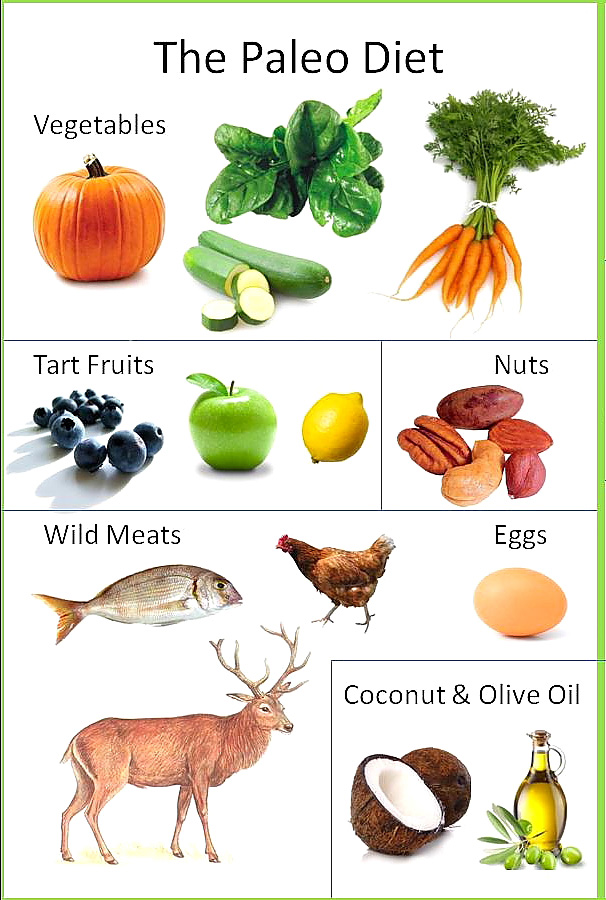
And the Paleo diet today is not limited to meat and veggies.
Robb’s research shows that the healthiest approach for dieters is to create a
diet “built around fruits, veggies, lean meats, nuts and seeds.”
After numerous studies, Robb feels it is clear that a Paleo
diet not only “provides all the nutrients for health, but that the Paleo
diet is, calorie for calorie, the most nutritious way one can eat. This
position that removing grains and dairy is inherently unhealthy is not based on
science.”
Expanding on the omnivorous low carb diet approach, Robb
notes that the use of resistant starch in modern Paleo diets highlights
“the bigger topic of the human gut biome.” In contrast, consuming
refined carbohydrates “appear to feed bacteria in the small intestine
leading to a condition aptly named ‘small intestinal bacterial overgrowth.’
This bacterial overgrowth in the small intestine is now being linked to a
remarkable number of health issues, from cardiovascular disease to
autoimmunity.”
The recognition of the role of fiber has grown, and “it
has only been recently that we have understood the mechanism to be that of
feeding our beneficial gut flora. A Paleo diet built around fruits, veggies,
roots, shoots, tubers nuts and seeds provides an enormous variety of fermentable
carbohydrate to keep our gut bacteria healthy,” Robb added.
Taking the omnivorous concept one step further, Paul and
Shou-Ching Jaminet have created a modified Paleo diet that includes fish, meat,
vegetables, fruit and what they call “safe starches.” The latter
includes rice and potatoes, which they emphasize as key to health and weight
loss. It’s all detailed in their book “Perfect Health Diet: Regain Health
and Lose Weight by Eating the Way You Were Meant to Eat.”
As Robb notes, a significant body of science supports the
theory that by avoiding foods toxic to humans, dieters can both shed pounds and
avoid disease. The “Perfect Health Diet” avoids grains, legumes,
refined sugars and processed oils.
Another
advocate of resistant starch is blogger Richard Nikoley. Author of “Free
The Animal: Lose Weight & Fat With The Paleo Diet,” he emphasizes that
enhancing the traditional Paleo diet in this way can provide benefits ranging
from improved sleep to a boost in weight loss.
What’s your vision of summer? Leisurely strolls on the
beach? Heading to the pool? If the wonders of warm weather are getting a dose
of cold water because last year’s bikini doesn’t fit, there’s a new version of
the intermittent fasting plan that can help. It promises to give you the
results you desire in just six weeks: “The Fast Beach Diet: The Super-Fast
Plan to Lose Weight and Get In Shape in Just Six Weeks.”
Author Mimi Spencer co-authored the famous “The
FastDiet: Lose Weight, Stay Healthy, and Live Longer with the Simple Secret of
Intermittent Fasting,” which teaches you how to feast five days a week and
go on a restricted-calories plan two days to lose weight. In an exclusive
interview, she explained how the Fast Beach Diet differs.
1. How does this plan
differ from the original Fast Diet?
‘The Fast Beach Diet was written in response to people who
asked for a souped-up version of the original 5:2 plan. It’s designed as a
kick-start program, which is tougher, wider-ranging and lasts for just six
weeks. It includes the introduction of exercise, together with lots of fresh
ways to change our habits around food, so that the choices we make on a daily
basis can be as healthy and sustainable as possible. Basically, it is an
extension of the original plan – but the key factor is that it is only intended
to last for six weeks. It’s like a boot camp for fasters!”
2. What tips can you
offer for restricted calorie days?
“Five-hundred calories (or six-hundred for a man) is,
admittedly, not a great deal, so it matters that you choose your food wisely on
a Fast Day. The 5:2 rule is ‘Mostly Plants and Protein’. Fill your plate with
vegetables and salad, and cut back hard on fast-release carbs (these are the
white ones – white bread, potatoes, white rice etc). Eat some protein, but make
it lean (shellfish, skinless chicken, vegetable protein in the form of beans or
tofu…) You need to opt for things that are satiating, so look for bulk and
fiber from veggies – and dishes that are full of flavor (lemon, chili, herbs,
spices – these all become paramount on a Fast Day).”
It’s important to understand that, while you may experience
hunger pangs on a Fast Day, they are nothing to fear; they tend to be transient
and increasingly manageable. The trick is to keep busy, distract yourself, and
stay hydrated. Fasting gets easier in time – and remember, you do have some
calories going in. This is not a total fast, just a brief break from food.
3. How much weight
can someone lose in four weeks on the FastBeach Diet?
“The program is for six weeks, and a 2lb a week loss
would be feasible. Some weeks you may lose more (particularly at the start);
others may be slower going. Look at the trajectory not the daily number.”
4. What are the
benefits in addition to weight loss?
“The benefits of intermittent fasting go beyond any
expected weight or fat loss. It can help cut the risk of a number of
age-related diseases, and encourage the body’s repair mechanisms. There can be
improvements in cardiovascular health, blood pressure and cholesterol levels,
and fasting also gives your pancreas a rest, boosting the effectiveness of the
insulin it produces in response to elevated blood glucose.
“As my co-author Dr Michael Mosley points out in the
original book, fasting will tweak your body into fat burning and increase its
insulin sensitivity; this is turn will reduce your risk of obesity, diabetes,
heart disease and cognitive decline. There’s even evidence that it increases
levels of neurotrophic factor in the brain, which should make you more
cheerful.
“Beyond these anticipated benefits, there is a more
subtle, psychological edge: The Fast Diet helps modify our behavior around
food, making us more mindful and aware; it offers a practical way to understand
our appetite, and give a bit more attention to what’s on the fork. For anyone
who tends to eat on autopilot (hey, who doesn’t?), that new awareness can be
hugely beneficial.
5. What’s a sample day like on a restricted calorie day?
(There’s also a cookbook: “The FastDiet Cookbook: 150 Delicious,
Calorie-Controlled Meals to Make Your Fasting Days Easy.”)
“Most fasters opt for a 5:2 protocol, fasting perhaps on a Monday and a Thursday each week. Some will have breakfast (protein is important here, so an egg would be great) at, say, 7am – then a ‘Fasting Window’ of around 12 hours until supper at 7pm. They divide their calories between those two meals, looking for bulk and satiety from plants, plus some protein. Other 5:2 followers choose to save all their calories for an evening meal, which effectively means they are fasting for a longer period of time. Both approaches can be successful – it’s up to the individual to experiment and discover what works for them.”















 Healthy Living & Life Style Blog